
Guest Blog: Building New in Old Provence, Part Two
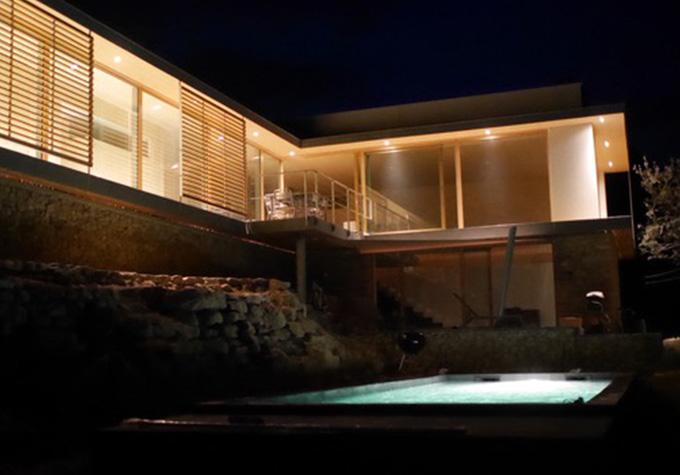
Planning success in Provence hinges on the character of the village mayor. Some are fiercely protective of the local style and resist any changes while others are becoming more open to contemporary design, as long as it complements the landscape and the historical architecture of the area.
Looking at Merindol les Oliviers, you might assume it was a battle to get approval. Yet in recent years, due to France’s sustainability-demanding building regulations, village after village are approving new builds in styles previously never before seen in the area. As long as a home blends in with the landscape and isn’t blindingly reflective, local councils can be open to high quality contemporary construction.
Luckily neither the council nor the locals – who are given a month to visit the site and see the designs – had objections to our plans. There are no further inspections after approval in France, so the quality and safety of the finished piece was solely in the hands of Isabelle and the team she assembled.
No part of the design used a pre-made element. Everything would have to be bespoke for the project across a wide range of materials, which meant finding a team of craftsmen who could work down to the millimetre. Isabelle’s prior projects in the area gave us a network of local artisans to draw from with lifetimes of experience working with timber, Provence stone and zinc roofing.
The team worked together brilliantly and fully embraced the non-traditional build, with Isabelle coming down every two or three weeks to make sure everything was progressing as planned. The most exciting moment was when the roof was dropped across the walls, revealing postcard-like views of the valley below. From approval to completion the build took ten months and was (almost) within budget.
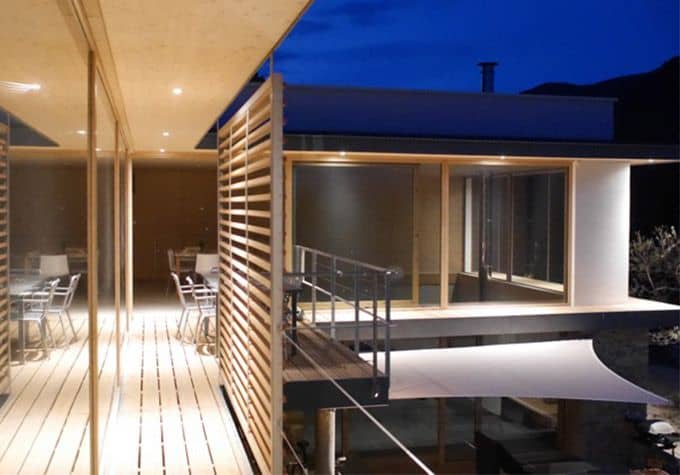
After living in a traditional house for so long, the versatility and openness of the new build feels refreshing and liberating. Ceiling heights range from 2.2 metres in the kitchen to 3.2 metres in the bedrooms and 5.5m in the double volume sitting room, the variety of scales stopping the house feeling too boxy and giving each space its own defined atmosphere.
This is especially apparent when moving from the pleasantly cool lower levels to the hotter, glassier upper floor – which still remained a comfortable 25 degrees even with a scorching 40 outside.
A big change has been not having to worry about young children bounding about this time. This has let us indulge in hard edges and exposed steps throughout the design, as well as having entire open sections of the house lifted high off the ground along one side without being anxious about the drop.
The hard part has been deciding what to do with all this space. Furniture and objects stand out so much more against a clean, open background that offers few distractions. Despite having the means to fully furnish this time around, we’ve decided to take it slow and let each space fill out organically, much like we did in our last house.
We haven’t experienced any backlash, either. As the site is at the end of a dead end road and surrounded by trees, the only spot it’s where it’s fully visible is a village about 2km away. From there, its low profile and stone/timber cladding and zinc roof blends better with the landscape than the more traditional, light coloured stucco house further along the hill.
Provence’s architectural heritage stretches back to Roman times, with structures that still stand today. Though stone and stucco farmhouses may be quintessential now, they were once new themselves. I’m glad contemporary architecture is becoming more welcome here, and hope my home – though deeply personal and certainly not for everyone – makes a strong case for new additions to Provence’s unique landscape.
By Tony Esslinger
-
How Has COVID-19 Affected the Planning Process?
Sally Arnold from Planning Potential considers the implications of COVID19 on the planning sector and reveals the results of some…
-
Why You Might Need an Archaeologist Before You Can Build
Florence Laino is an Associate Partner at L – P : Archaeology, where she oversees everything from small archaeological assessments…
-
Market Update: London House Prices Are Booming Already
Jeremy McGivern is Managing Director of Mercury Homesearch, London’s premier search agents and sales negotiatiors for luxury properties. This month,…
-
How to Speed Up the Planning Process – Sally Arnold’s 5 Top Tips
Sally Arnold is an Associate at Planning Potential, a leading planning consultancy specialising in commercial and high end residential projects…
-
Could Health and Safety Regulations Shut Down Your Project?
Dr. James Thornhill is a health and safety academic and consultant with more than 20 years of experience. He is…
Social Media
@dyergrimes_architecture